
Dental implants in Royal Oak
Replace a missing tooth with one that doesn't come out.
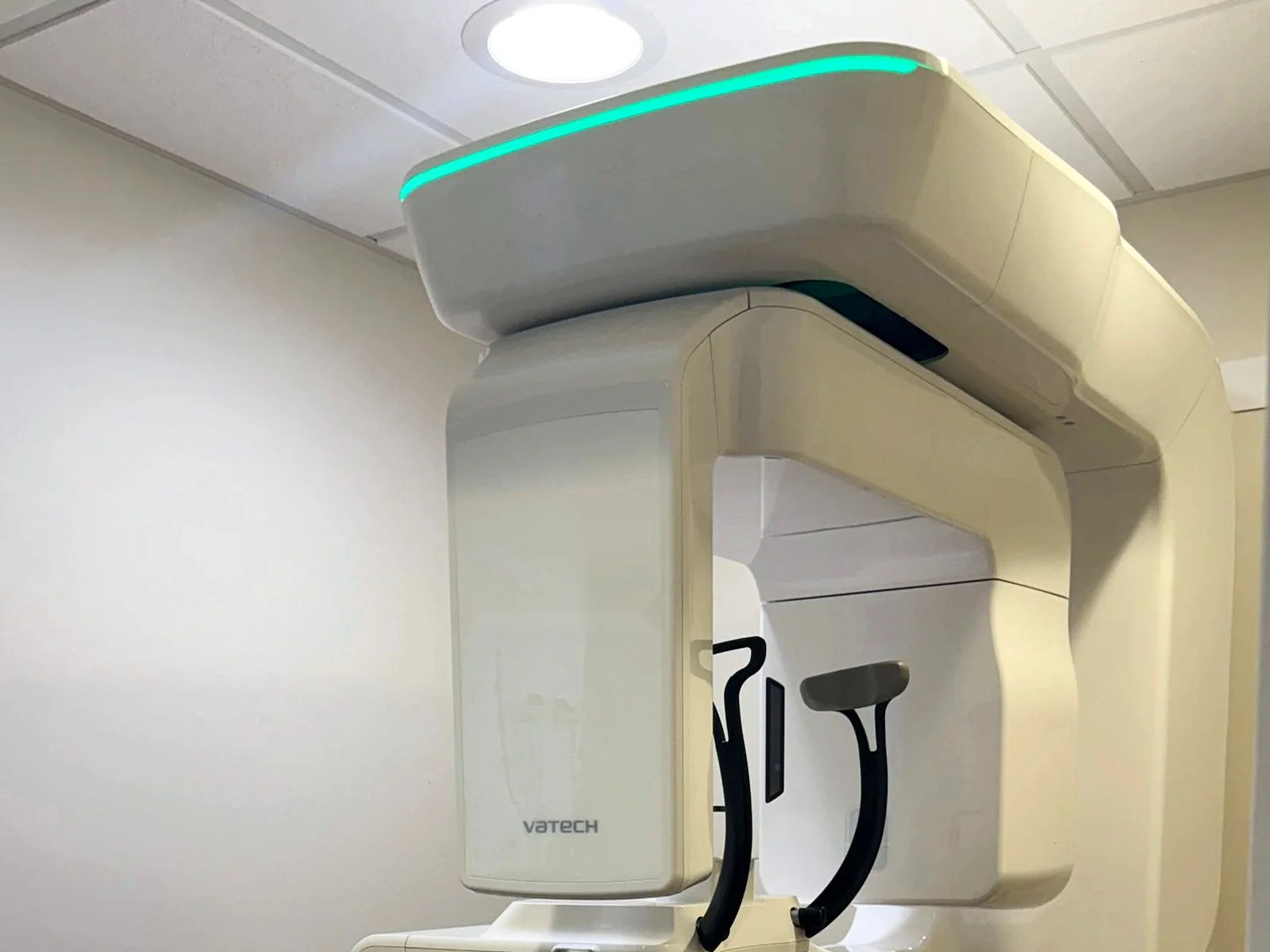
A dental implant is a small titanium post that takes the place of a tooth root, with a crown on top. It looks and feels like a natural tooth, and it doesn't lean on the teeth next to it the way a bridge does. Dr. Ansari plans every implant on a 3D CT scan, then places and restores it in our Royal Oak office.
Dental implants at a glance
- What it is
- A titanium post in the jaw with a crown on top
- Good for
- One tooth, several teeth, or a whole arch
- Planning
- 3D CT scan in our office
- Healing
- About 3 to 6 months before the final crown, with a temporary in the meantime
- Comfort
- Local anesthetic, with nitrous or oral sedation if you want it
- Consult
- Free, plus a fee for the CT scan
Is this for you?
- You're missing one tooth and don't want to grind down the teeth next to it for a bridge
- You've lost several teeth and your partial is loose or uncomfortable
- A tooth needs to come out and you want to plan the replacement now
- Your denture moves when you eat or talk (see snap-in dentures and All-on-X)
What happens at your visit
- Consult and 3D scan
A CT scan shows your bone, nerves and sinuses in 3D. That tells us whether an implant will work and exactly where it should go.
- Placing the implant
It's done with local anesthetic, and you can add nitrous or oral sedation. A lot of patients tell us it was easier than the extraction.
- Healing
Over the next three to six months the implant fuses with the bone. You won't have a gap in the meantime. We'll give you a temporary.
- Your new tooth
We take a digital scan, with no impression trays, and your crown is made to match the teeth around it.
Missing most or all of your teeth?
Replacing a whole arch one implant at a time isn't usually the best route. There are two better ones. All-on-X attaches a full set of fixed teeth to four to six implants, and most people leave surgery day with fixed temporary teeth. Snap-in dentures use two to four implants to hold a denture in place, and we can often convert the denture you already have.
Cost and insurance
An implant costs more up front than a bridge or partial, but it usually lasts decades and doesn't wear down your other teeth. Some insurance plans pay part of it. You'll get a written, all-in price, and financing is available. See financing and insurance, or our membership plan if you don't have insurance.
Common questions
Does getting an implant hurt?
The area is numb during the procedure. Afterward, most people get by with over-the-counter pain relievers for a few days. If you're nervous, you can add nitrous or oral sedation.
Am I too old, or is my bone too thin?
Age usually isn't the problem. Your health and your bone are what matter. If the bone is thin, a graft can often rebuild it, and the CT scan tells us before you commit to anything.
What's the difference between an implant and a bridge?
A bridge fills a gap by crowning the teeth on either side and hanging a tooth between them. An implant replaces the root itself and stands on its own, so the teeth next to it aren't touched.
Related
You might also be looking for
All-on-X full-arch implants
A full arch of fixed teeth on four to six implants. Most people leave surgery day with fixed temporary teeth.
Learn moreSnap-in dentures
Two to four implants hold your denture in place. We can often convert the one you already have.
Learn moreExtractions & oral surgery
Extractions, wisdom teeth and bone grafts, with nitrous or oral sedation available.
Learn moreReady when you are.
Book online or call. New patients are always welcome.